Energy coordination
Your home is full of smart devices. But are they working together?
Solar panels, home batteries, heat pumps and electric cars give us new ways to use energy more intelligently. But when each device optimises for itself, the result may not be best for the home as a whole. Fluks changes how they work together.
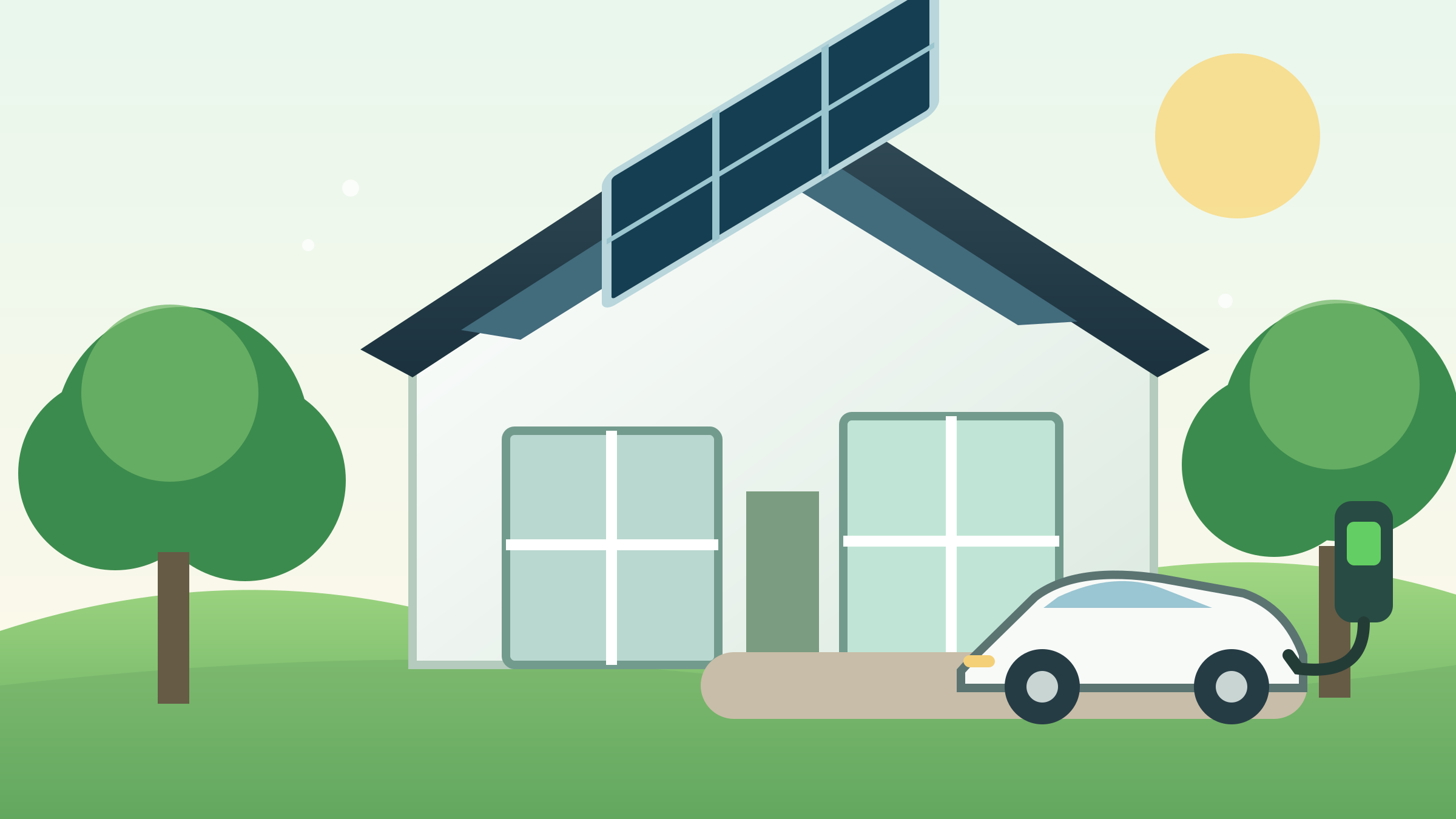
Picture a sunny afternoon. Your solar panels are producing more electricity than the house is using. The home battery is nearly full, the hot-water tank is already warm, and the electric car is in the driveway.
What is the best decision?
Should the surplus be sold to the grid? Should the car charge? Should more energy be stored as heat? Or is it actually better to wait because electricity is expected to become even cheaper later?
The answer depends on more than what is happening right now. It also depends on tomorrow's weather, upcoming electricity prices, the home's expected consumption and when the energy will be needed.
These are exactly the kinds of decisions Fluks is designed to make.
When every device thinks for itself
Many modern energy devices already have their own smart controls.
An electric car can charge during the cheapest hours. A home battery can store solar energy. A heat pump can heat water at selected times.
But individual devices do not necessarily know what the rest of the home is doing.
The car may start charging while the battery is saving electricity for the evening. The heat pump may start during an expensive period even though it could have warmed its buffer earlier. And solar panels may export energy that the home could have used later.
Each decision can make sense on its own. Together, they may be inefficient.
Fluks sees the home's energy as one coordinated task.
That means the devices' capabilities, limits and expected needs can be considered in the same optimisation.
And that applies whether the home has one supported device or several.
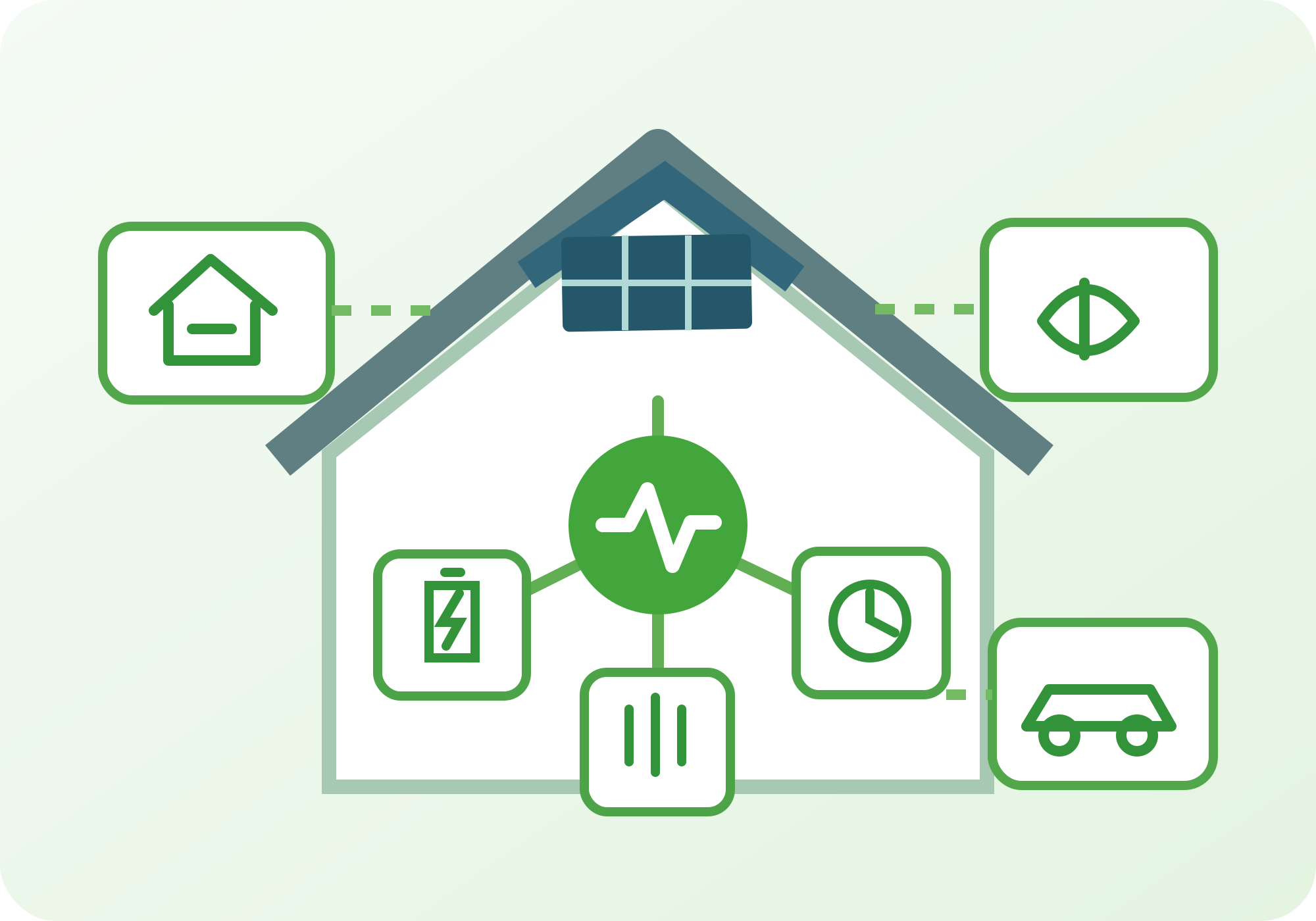
The home battery: more than charging in the cheapest hours
A home battery can do much more than store today's solar energy for the evening.
It can charge from the grid when electricity is cheap, supply energy when prices are high, and make room for expected solar production so that energy can be used well.
The challenge is knowing when the battery should do what.
A fixed schedule can work well on an ordinary day. But what happens when the sun produces more than expected, household consumption changes, or the cheapest electricity suddenly comes at a different time?
Fluks works with expectations for consumption, solar production and electricity prices, and continuously adjusts the battery plan as new information becomes available.
For example, the battery may avoid charging from the grid if plenty of solar energy is expected later. Or it may charge during cheap hours to cover an upcoming expensive period.
It is not about always filling the battery or always avoiding exports.
It is about using the battery's capacity when it creates the most value.
Unlike fixed automations, the battery is not tied to yesterday's expectations. When reality changes, the plan can change with it.
Battery operation across the day
Heat is also a way to store energy
When we talk about energy storage, most people think of batteries.
But energy can also be stored as heat.
A hot-water tank can be heated before the water is needed. A heat pump's buffer tank can store warmth for later. In some situations, an electrically heated room can be warmed at a more favourable time. And a swimming pool holds a considerable amount of water that can act as a large thermal store.
This means electricity for heating does not always have to be used at the exact time the heat is needed.
Imagine electricity is cheap in the middle of the day but expensive between 5 and 9 pm.
Instead of running the hot-water tank during the expensive period, Fluks can schedule heating earlier when there is room to do so within temperature limits.
The same principle can be used across different kinds of electric heating.
Heat then becomes a flexible resource, not just demand to be met.
When heating devices are included in the same optimisation as the battery and electric car, Fluks can account for where available energy is most useful.
Illustrative heating schedule
The electric car: why charge more than you need?
Smart EV charging often means finding the cheapest hours before the car is needed.
But one important question is missing:
How much energy does the car actually need?
If the car is usually used for short trips, there may be no reason to charge it to its usual level every night.
And if a longer drive is expected in a few days, it may be useful to start planning the charge now.
Fluks' proactive charging looks ahead over the coming seven days and uses experience from the car's actual driving and charging patterns to estimate future needs.
Expected electricity prices and charging opportunities are considered at the same time.
This can lead to decisions that differ from conventional smart charging.
If the car has enough energy for upcoming trips, Fluks can wait for cheaper electricity. If an unexpectedly cheap charging opportunity appears while the car is home, it can be used. And if needs change, the plan can follow.
Fluks gradually learns from what actually happens instead of asking the user to enter a detailed driving calendar in advance.
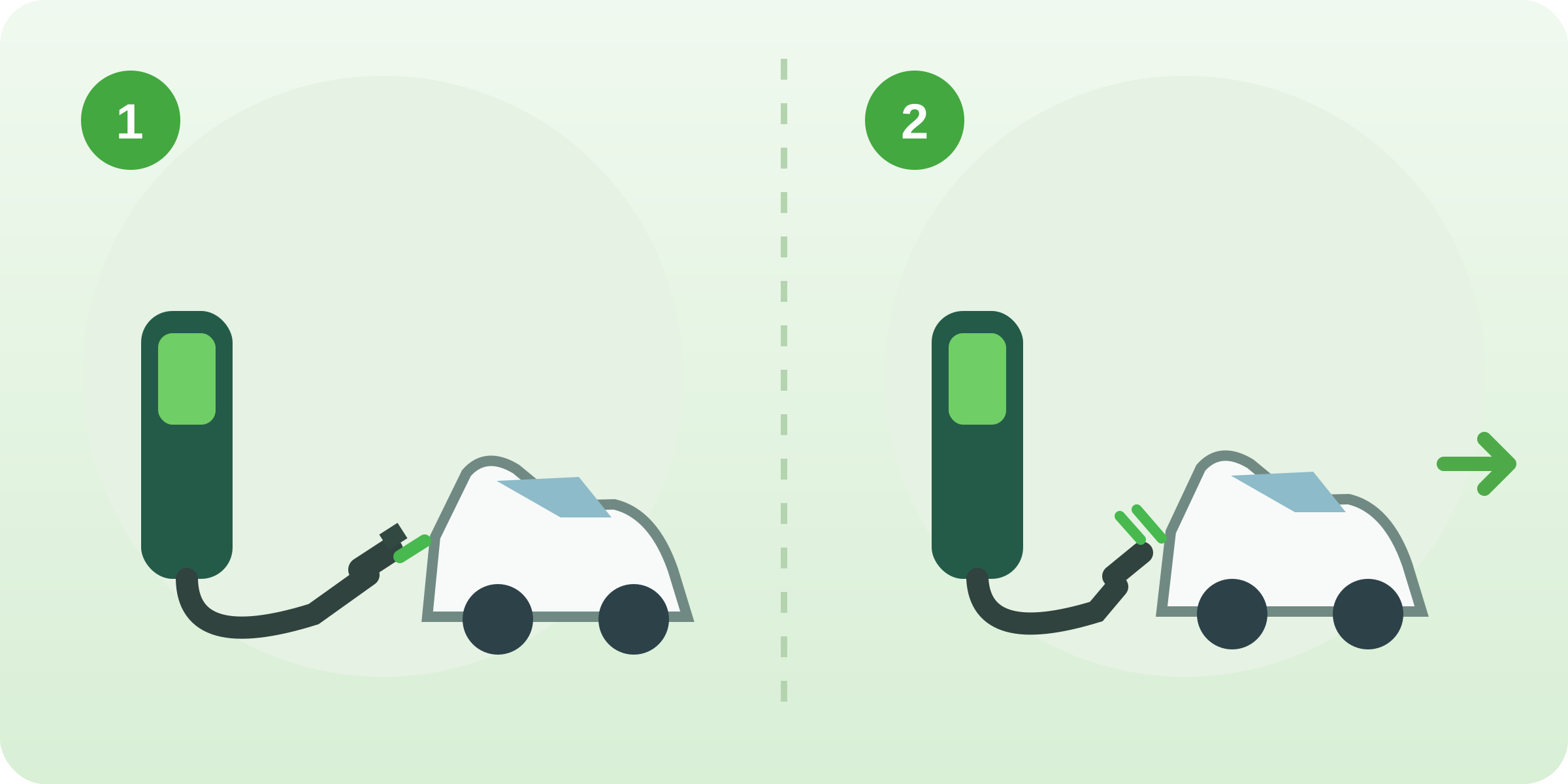
How to program your electric car
Step 1: Plug in.
Step 2: Unplug when you need to drive.
That is the ambition behind proactive charging.
No daily entry of departure times. No manual hunt for cheap hours. No constant adjustment of the charging plan because tomorrow looks different than expected.
Most importantly, if the user wants to charge now, an automatic plan should not get in the way.
The user's current wishes always come first.
Illustrative energy need over seven days
Reality always comes first
Every forecast is sometimes wrong.
The weather changes. The family uses more hot water than usual. The car stays home on a day it is normally away. Or an unexpected need to charge comes up.
An energy system that only follows its original plan risks making the wrong decisions, even if the plan made sense when it was created.
Fluks is built on a different principle:
A forecast is an informed guess. An observation is reality. And the user's wishes set the goal.
Forecasts help look ahead and make better decisions. But when new measurements and observations show that the situation has changed, the controls must be able to respond.
For example, a car that is plugged in should be treated as plugged in, even if it would normally be away at that time.
Or the battery plan should be able to adapt if solar production is lower than expected.
The goal is not to predict the future perfectly.
It is to make the best possible decision with the information available and adjust it when reality shows something different.
You should not have to keep an electricity app in your hand
There are many ways to track electricity prices, monitor solar production and change home automations yourself.
But energy management is not a hobby for most people.
People want a lower electricity bill, better use of their own solar energy and confidence that the car will be ready when needed.
They do not necessarily want to spend the evening figuring out whether the battery should charge at 2:15 am or the hot-water tank should start an hour earlier.
That is where Fluks should make a difference.
Fluks adapts to your everyday life. You should not have to adapt your life to Fluks.
One device is enough. More devices create new opportunities.
You do not need solar panels, a battery, a heat pump and an electric car to use Fluks.
A home with just one supported home battery can benefit from intelligent battery control.
A home with an electric car can use smart charging.
And a home with electric heating can shift heat consumption to more favourable times.
When more devices are added, new opportunities appear.
For example, Fluks can schedule the hot-water tank to use cheap electricity while the home battery saves its energy for a more expensive period. Or EV charging can be coordinated with the home's expected consumption.
The key is that every new device does not need its own independent plan.
It can become part of the shared optimisation.
Fluks does not require a fully smart home. It can grow along with the home.
How does Fluks connect to the devices in your home?
Fluks uses Home Assistant to communicate with the devices that need to be monitored and controlled.
Home Assistant is an open platform for smart homes. It can connect equipment from many manufacturers and bring information and controls together in one place.
To use Fluks, Home Assistant must first be installed, and the relevant devices need to be connected with their required measurements and controls available.
That is the technical part of setup, and depending on the equipment it may take some work.
Once the connection is established, Fluks can use observations to gradually learn about device characteristics and the home's energy patterns.
The aim is to avoid spending time configuring technical details the system can learn for itself.
And Home Assistant can do much more than energy
There is another benefit to installing Home Assistant.
The platform can be used for much more than energy management.
It can support smart lighting, motion sensors, automatic curtain control, indoor climate, monitoring and security.
The same installation that connects Fluks to the home's energy devices can also become the foundation for a broader smart home.
Fluks handles energy optimisation. Home Assistant connects and controls the equipment.
The two solutions have different jobs, but can complement each other.
From fixed rules to ongoing decisions
Traditional automation is often built around rules:
If electricity is cheap, charge the battery.
If it is 5 pm, stop charging.
If solar production exceeds a certain threshold, start a device.
These rules can be useful. But reality has far more combinations than can be described in advance.
Instead, Fluks tries to find the most favourable overall plan based on current opportunities and expectations.
That means the battery, car and heating do not only react to one price or one measurement. They can be part of a shared assessment of how energy is best used over time.
And when the assumptions change, decisions can change too.
It is the difference between telling the home exactly what to do in every imaginable situation and letting it work towards a goal.
A smart home should also be easy to live in
The best energy optimisation is not necessarily the one with the most settings, graphs or automations.
It is the one that works on an ordinary day.
When the sun shines. When it rains. When the car stays home. When the family uses more hot water than expected. And when the user simply decides to do something different.
Fluks is built on the idea that intelligent energy management should handle these situations without constant intervention.
From a single home battery to a home with solar panels, an electric car, a heat pump and electric heating, the goal is the same:
Help energy work better together, and let everyday life take care of itself.
Your energy. Decides together.