
Knowledge · EV charging
Your EV does not need to charge every night – the charger needs to know when to wait
You get home, plug in the car, and nothing happens. Is something wrong? No. Perhaps your charger has simply worked out that it is better to wait.
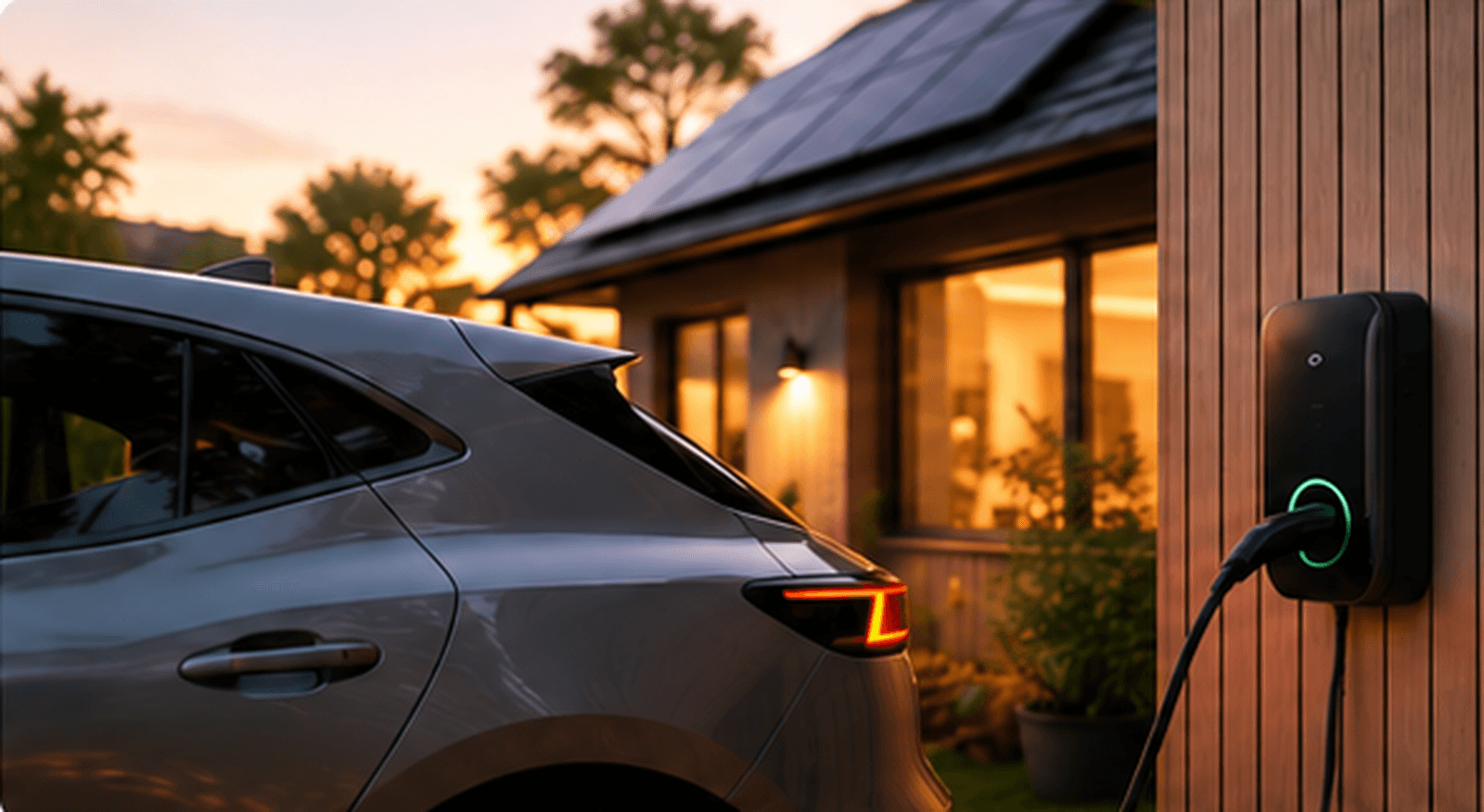
Imagine getting home after an ordinary day. The car has 68% charge left, and you plug in as usual.
But the car does not start charging.
It could easily fill the battery to 80%, and electricity may even be fairly cheap right now. Still, nothing happens.
That does not sound very intelligent at first. We have learned that a smart EV charger should find the cheapest hours and make sure the car is ready.
But what if the cheapest charging is not tonight?
What if electricity gets even cheaper tomorrow? Or the day after? And what if you do not need more energy before then?
Perhaps the charger has actually thought this through.
Does the car need to charge tonight?
Smart charging is not necessarily the same as proactive charging
Most people are familiar with the idea behind smart charging.
You tell the system when the car needs to be ready and how much charge you would like in the battery. It then finds the cheapest hours within that period.
That works well, and it is already much better than starting to charge as soon as the plug goes in.
But there is a limitation.
The system assumes the car needs to charge. The only question is when.
What if the car already has enough energy for the next few days of driving?
Then it may not make sense to buy electricity tonight just because these are the cheapest hours tonight.
The cheapest hour today is not necessarily cheaper than the cheapest hour tomorrow.
And this is where proactive charging becomes interesting.
Electricity prices can change over the next few days
A schematic electricity-price curve over three days. The prices shown are illustrative, not live prices.
Would you refuel your petrol car every evening?
Imagine that you have an ordinary petrol car with 68% left in the tank.
Would you stop at a petrol station every evening to fill it to 80%?
Probably not.
You know there is enough fuel for the next few days. So why refuel already?
With an EV, we have somehow got used to wanting the battery filled to a certain level every time we get home.
But why?
The difference, of course, is that electricity prices change all the time. That is exactly why it makes even more sense to think ahead.
If the car has enough energy and electricity will be cheaper later, why charge now?
It really is not more complicated than that.
Why think one night ahead when you can think several days ahead?
Imagine that the car needs 20 kWh to reach your usual charge level.
Tonight, electricity costs DKK 2.50 per kWh, including grid tariffs and taxes. Tomorrow it is expected to cost DKK 1 per kWh.
If you charge tonight, those 20 kWh cost DKK 50.
If you can wait until tomorrow, the same 20 kWh cost DKK 20.
That is a DKK 30 difference without changing anything in your everyday life.
The prices are illustrative, and future prices may be uncertain.
Of course, this only works if the car has enough energy for the driving you expect and can charge when the cheaper electricity is available.
But this is exactly the kind of decision an intelligent system should be able to make.
It should not just find the cheapest hours before the next departure. It should also assess whether charging before then is necessary at all.
And sometimes the best decision is to do nothing.
If you can wait until tomorrow
You save DKK 30
Your car already tells us a lot about your habits
There is just one problem.
How is the charger supposed to know when you will need the car again?
Should you enter your calendar? Tell it when you leave for work? Create a schedule for every day of the week?
You could, of course. But then you are doing the work for the intelligent charging system.
At Fluks, we take a different approach.
You really only need to do two things:
How charging learns your habits
Unplug the car when you need to use it.
Plug it in again when you are finished using it for now.
That is all.
Every time the car is disconnected, it tells us when you actually need it. Every time it is connected again, it tells us when it is back and available for charging.
At the same time, the system can learn from the car’s energy use, battery level and previous charging sessions.
Gradually, a pattern begins to emerge.
Perhaps you use the car almost every morning. Perhaps it stays parked for most of the weekend. Perhaps your driving varies so much that the system needs to be especially careful about its expectations.
You do not necessarily need to tell the system any of this.
It should learn it.
Twenty kilometres is not always twenty kilometres
There is another thing that changes through the year: how far the car can travel on a kilowatt-hour.
An EV typically uses more electricity in winter than in summer. Cold weather, cabin heating and battery temperature affect how far you get from the same amount of energy.
That is why it is not enough to learn how many kilometres you usually drive.
Fluks also learns how far the car actually travels per kWh and can continuously adjust its understanding of the car’s energy needs.
If your daily drive needs more energy in January than in July, the charging plan should take that into account.
That means Fluks learns not only your habits, but also how your car behaves.
Combined with expected electricity prices and the time of your next trip, this makes it possible to make a much better-informed decision about whether the car should charge now or wait.
But what if I suddenly need to drive farther?
That is probably the most obvious question.
What good is saving DKK 30 on charging if the car does not have enough energy when you need it?
Not much.
That is why proactive charging is not about always waiting as long as possible.
It is about finding a sensible balance between cost, expected needs and uncertainty.
When the system has a good understanding of your usual driving patterns, it can better assess how much energy the car is likely to need.
If it knows very little about your habits, or if they change, it needs to account for that uncertainty.
And of course, no energy system can predict a spontaneous long trip with certainty.
But the point is that you should not have to monitor electricity prices, battery percentages and departure times to charge sensibly.
The system should take care of that.
Charging is not a decision made in isolation
There is another benefit to letting energy management think further ahead.
The EV may not be the only device in the home that needs electricity.
Fluks sees household energy use as a whole, with devices working together instead of optimising independently.
That means the decision to charge the car can also take into account what else is happening at home.
The basic idea is the same: electricity should be used when it makes the most sense, not merely because one device thinks the timing looks good.
The charger is the one that needs patience
We have spent years making EV charging easier.
And we have made good progress.
But perhaps the next step is not simply faster charging, more charge points or even smarter schedules.
Perhaps charging needs to start understanding our everyday lives.
The car does not necessarily need to be filled just because it is plugged in.
A desire to charge is not the same as an urgent need.
And sometimes the best decision is to wait.
You should not have to stand in the driveway wondering whether electricity might be cheaper tomorrow.
Just unplug when you need to leave, and plug in again when you get home.
You are not the one who needs patience. The charger does.
And it should be intelligent enough to know when it is time to stop waiting.